مصر · Egypt · Digital poster
Bastet (bronze cat)
The seated cat that Egypt gave to its temples.
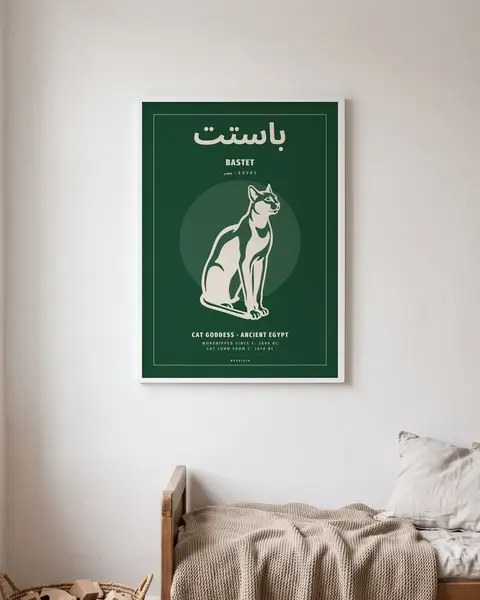
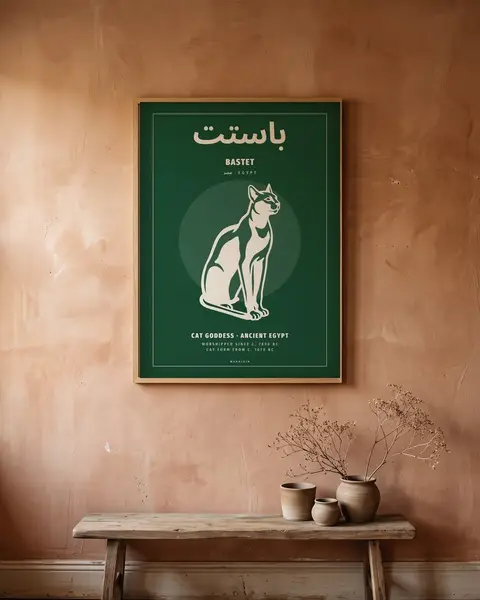
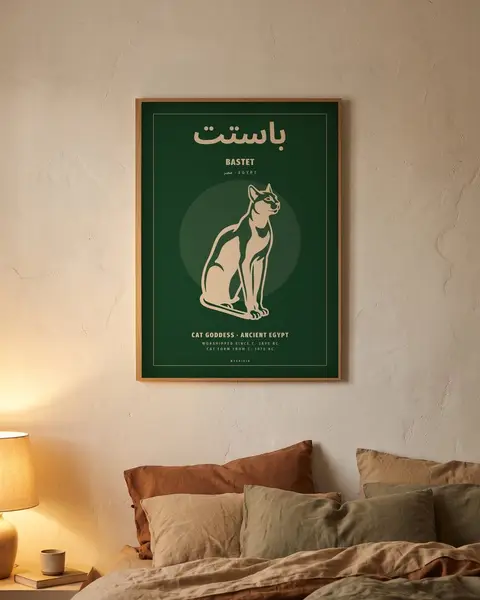
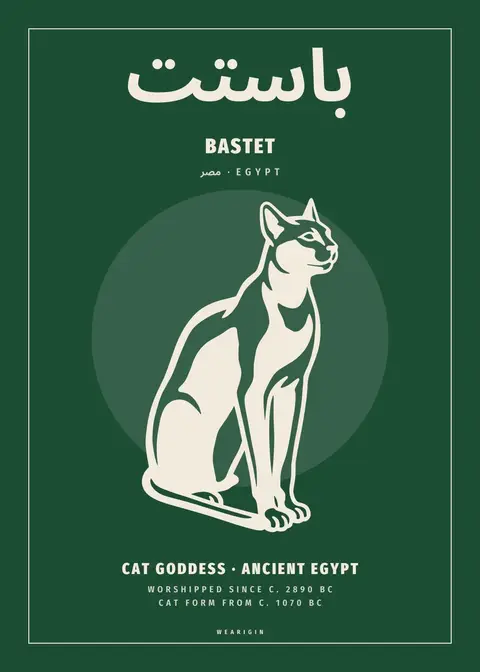
Colour: Fir green, dark ground
€6.90
Digital file · instant download · no shipping
Download link valid for 30 days · up to 10 downloads · details
The download link is valid for 30 days from the date of provision and may be used a maximum of 10 times.
What you get
- · The chosen colour as 4 vector PDFs for standard frames: 50 × 70 cm (also 40 × 56, 30 × 42), ISO A (A4–A1), 3:4 (30 × 40, 45 × 60 cm, 18 × 24 in), 2:3 (20 × 30, 40 × 60, 60 × 90 cm, 24 × 36 in) — plus the same as JPG for copy shops and photo services (300 dpi up to A2 or 20 × 30 in; larger: use the PDF)
- · PDF: sharp at any size · JPG: 300 dpi at the stated size, plus a short printing guide
- · Files, not a printed poster, no frame
- · For private use, not for resale
Licence
With your purchase you acquire a non-exclusive, non-transferable licence for private use of the files. Permitted: printing for your own private use (also via a copy shop or photo service).
Prohibited: reselling or passing on the files, commercial use, making products for sale, using the files to train AI systems, or any public distribution of the files.
All copyright and other rights in the designs remain with the seller.
Where to print?
- · Copy shop near you: bring the PDF on a USB stick or send it by e-mail
- · Photo service in a drugstore or online: choose a poster size of the same shape (e.g. A3 or 30 × 40)
- · At home: up to A3 on a good printer
- · Tip: matte paper around 200 g/m² looks best
About the design
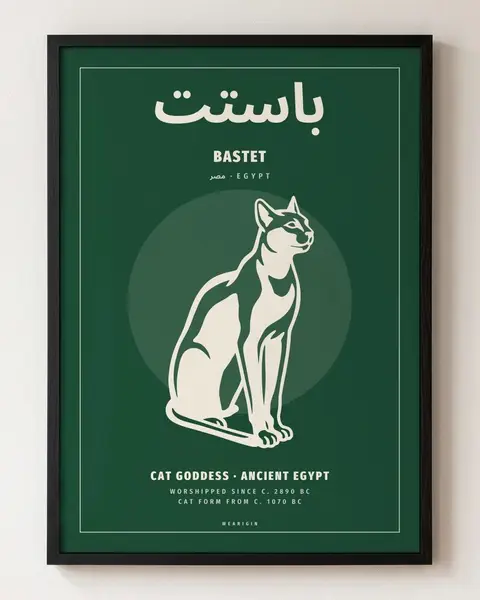
Bastet is the cat goddess of ancient Egypt. Her image, the slender seated cat, is one of the most familiar figures the ancient world has left us.
She was worshipped as early as the Second Dynasty, around 2890 BC, first as a lioness, a fierce guardian of the sun god Ra and of the king. From the Third Intermediate Period, about 1070–712 BC, she took the form of the domestic cat or of a cat-headed woman: a goddess of pregnancy and birth, a protector against disease and evil spirits, a good mother sometimes shown with her kittens. Her city was Bubastis in the Nile delta, “House of Bastet”. Herodotus wrote in the 5th century BC that her festival there drew some 700,000 people, with more wine drunk than in the rest of the year. More than 300,000 mummified cats were found at her temple. Her name may mean “she of the ointment jar”; her signs are the sistrum, the ointment jar and the sun disc.
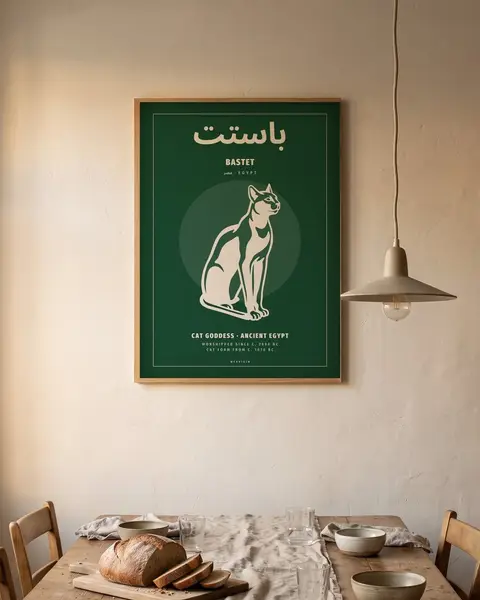
Our drawing is a free interpretation, not a copy of one museum bronze. A seated cat with upright forelegs and pointed ears turns its head to the side; the tail curls forward around the body, and a few pale openings mark chest and flank. The name “bastet” and EGYPT stand beneath.
For an Egyptian home abroad, for anyone who lives with a cat, or for a wall that wants a quiet guardian.
Protection against disease and evil, and motherhood; the lioness who became a cat.