ΕΛΛΑΔΑ · Greece · Digital poster
Cycladic figure (folded arms)
A marble figure from the Aegean, more than 4,500 years old.
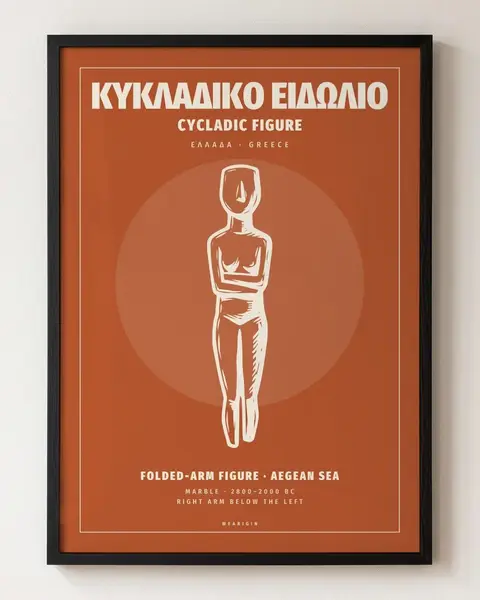
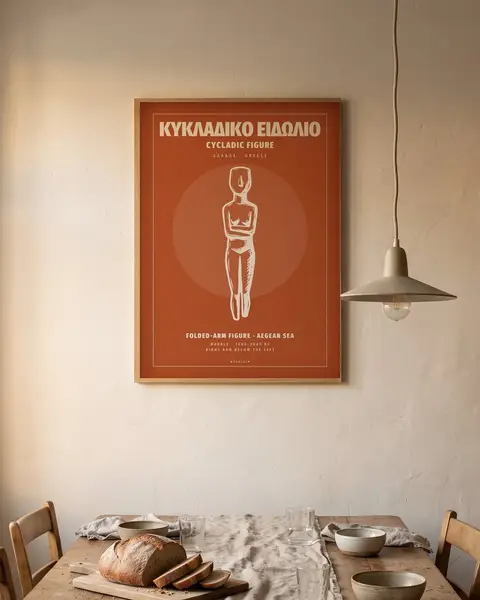
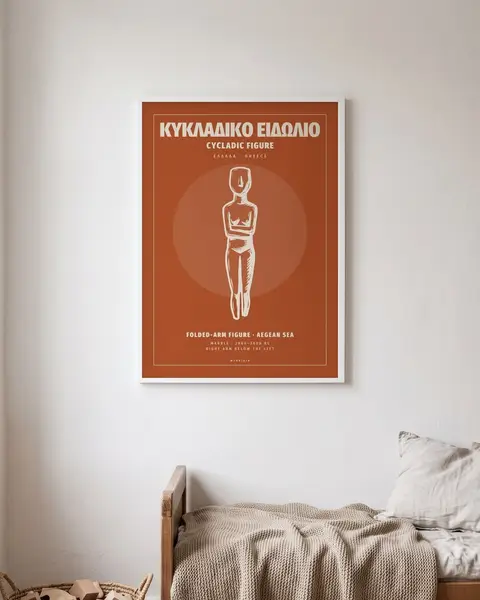
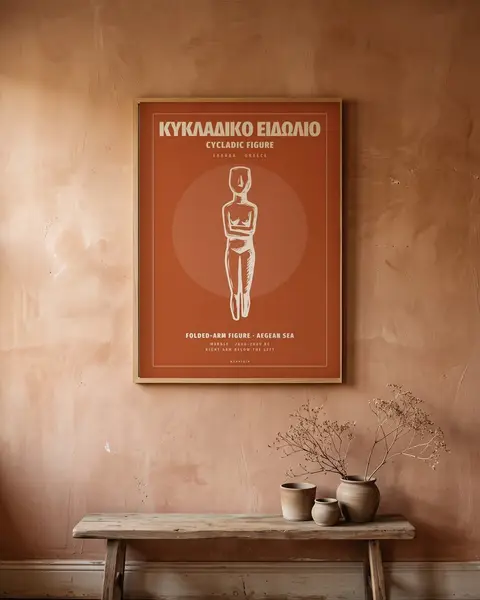
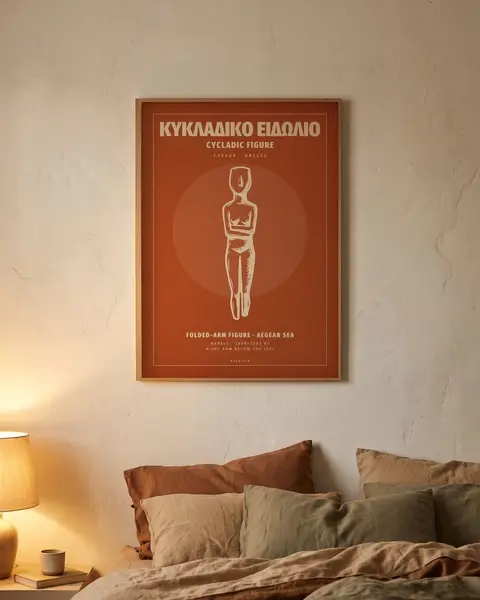
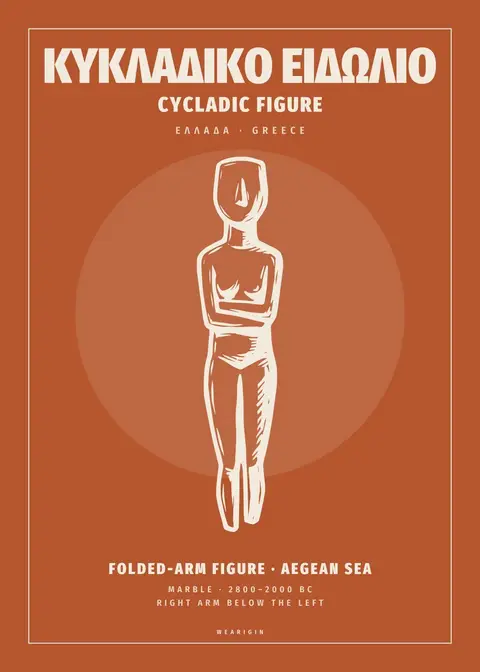
Colour: Terracotta, dark ground
€6.90
Digital file · instant download · no shipping
Download link valid for 30 days · up to 10 downloads · details
The download link is valid for 30 days from the date of provision and may be used a maximum of 10 times.
What you get
- · The chosen colour as 4 vector PDFs for standard frames: 50 × 70 cm (also 40 × 56, 30 × 42), ISO A (A4–A1), 3:4 (30 × 40, 45 × 60 cm, 18 × 24 in), 2:3 (20 × 30, 40 × 60, 60 × 90 cm, 24 × 36 in) — plus the same as JPG for copy shops and photo services (300 dpi up to A2 or 20 × 30 in; larger: use the PDF)
- · PDF: sharp at any size · JPG: 300 dpi at the stated size, plus a short printing guide
- · Files, not a printed poster, no frame
- · For private use, not for resale
Licence
With your purchase you acquire a non-exclusive, non-transferable licence for private use of the files. Permitted: printing for your own private use (also via a copy shop or photo service).
Prohibited: reselling or passing on the files, commercial use, making products for sale, using the files to train AI systems, or any public distribution of the files.
All copyright and other rights in the designs remain with the seller.
Where to print?
- · Copy shop near you: bring the PDF on a USB stick or send it by e-mail
- · Photo service in a drugstore or online: choose a poster size of the same shape (e.g. A3 or 30 × 40)
- · At home: up to A3 on a good printer
- · Tip: matte paper around 200 g/m² looks best
About the design
The marble figures of the Cyclades are the oldest sculpture of Greece. Slim, smooth, with arms folded across the body, they were made in the Aegean islands more than four thousand years ago.
The Cycladic culture flourished from about 3300 BC; its figures belong to the Early Cycladic phases between about 2800 and 2000 BC. Most are female and nude, with the right arm folded below the left; they range from miniatures of 8 centimetres to statues of 1.5 metres. The types are named after island cemeteries: Spedos on Naxos, the most common, Plastiras on Paros, Chalandriani on Syros, Kapsala and Dokathismata. The smooth faces once carried paint, with the eyes and other details picked out in colour. All known figures were found in graves, though not every grave held one; the largest may have stood in shrines or houses. What they meant to their makers is not known.
Our drawing is a free interpretation, not a copy of one museum figure. A narrow silhouette with a lyre-shaped head and a long nose, arms folded over the chest, legs together, with only a few lines inside the outline. The name in Greek, “κυκλαδικό ειδώλιο”, and GREECE stand beneath.
For a Greek home abroad, for lovers of simple form, or for a wall that wants the quietest figure in art.
Unknown; the figures keep their silence.