საქართველო · Georgia · Digital poster
Qvevri (clay wine vessel)
A clay vessel, buried in the earth, where the wine matures.
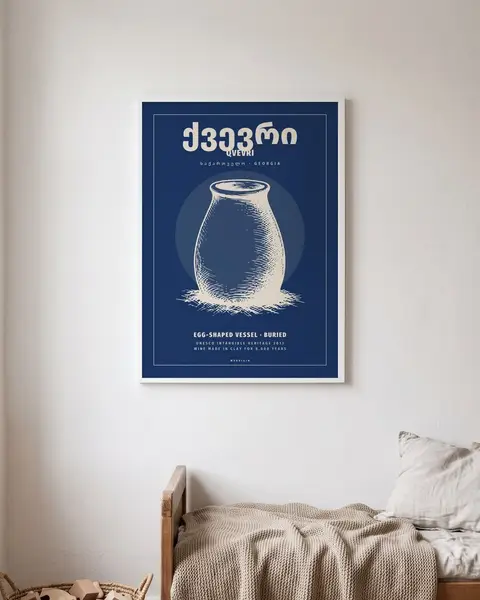
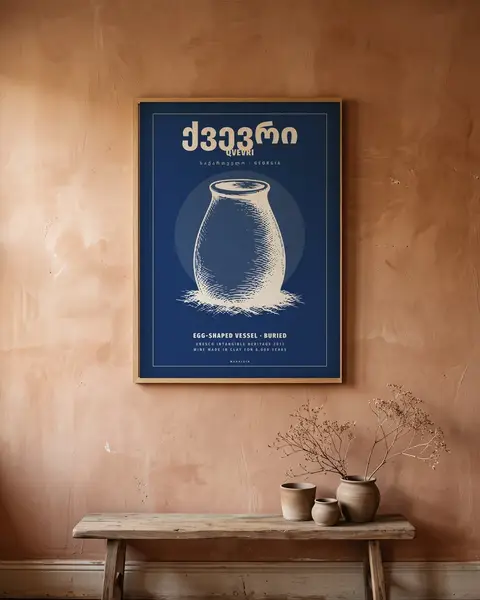
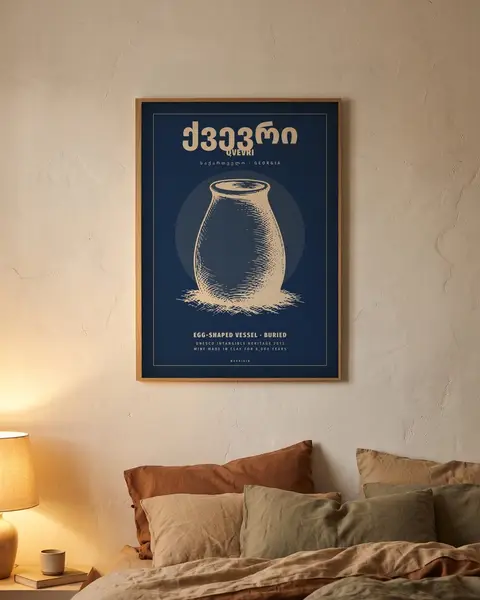
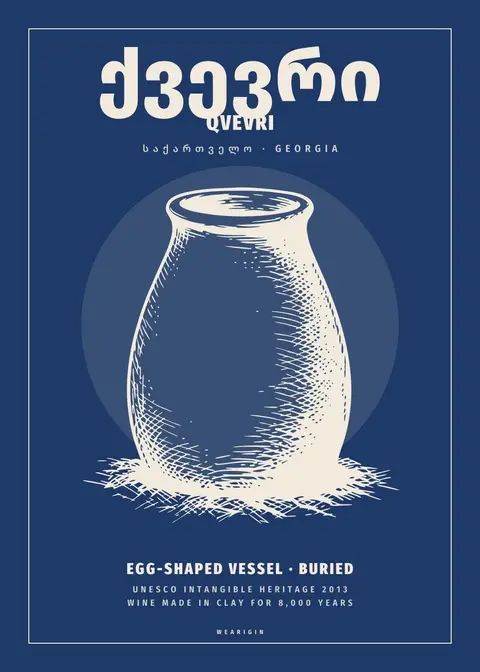
Colour: Night blue, dark ground
€6.90
Digital file · instant download · no shipping
Download link valid for 30 days · up to 10 downloads · details
The download link is valid for 30 days from the date of provision and may be used a maximum of 10 times.
What you get
- · The chosen colour as 4 vector PDFs for standard frames: 50 × 70 cm (also 40 × 56, 30 × 42), ISO A (A4–A1), 3:4 (30 × 40, 45 × 60 cm, 18 × 24 in), 2:3 (20 × 30, 40 × 60, 60 × 90 cm, 24 × 36 in) — plus the same as JPG for copy shops and photo services (300 dpi up to A2 or 20 × 30 in; larger: use the PDF)
- · PDF: sharp at any size · JPG: 300 dpi at the stated size, plus a short printing guide
- · Files, not a printed poster, no frame
- · For private use, not for resale
Licence
With your purchase you acquire a non-exclusive, non-transferable licence for private use of the files. Permitted: printing for your own private use (also via a copy shop or photo service).
Prohibited: reselling or passing on the files, commercial use, making products for sale, using the files to train AI systems, or any public distribution of the files.
All copyright and other rights in the designs remain with the seller.
Where to print?
- · Copy shop near you: bring the PDF on a USB stick or send it by e-mail
- · Photo service in a drugstore or online: choose a poster size of the same shape (e.g. A3 or 30 × 40)
- · At home: up to A3 on a good printer
- · Tip: matte paper around 200 g/m² looks best
About the design
A qvevri, ქვევრი, is the large clay vessel in which Georgians have made wine for eight thousand years. Egg-shaped and without handles, it is buried in the earth up to its mouth.
Grape pips and fragments of qvevri from the sixth millennium BC have been found at Gadachrili Gora and neighbouring sites in Kvemo Kartli, the oldest evidence of winemaking known. The vessels hold from 20 to 10,000 litres, around 800 being usual. Pressed grapes go in with skins, stalks and pips; the qvevri is sealed and the wine ferments and rests for at least five to six months before it is drawn off. Afterwards the vessel is washed, sterilised with lime and coated again with beeswax. In Kakheti the white wine stays on its skins for months and turns amber; in Imereti far less of the pomace is used. Qvevri are still made in villages of Imereti, Guria and Kakheti. In 2013 UNESCO inscribed the ancient Georgian qvevri winemaking method on its Representative List of the Intangible Cultural Heritage of Humanity.
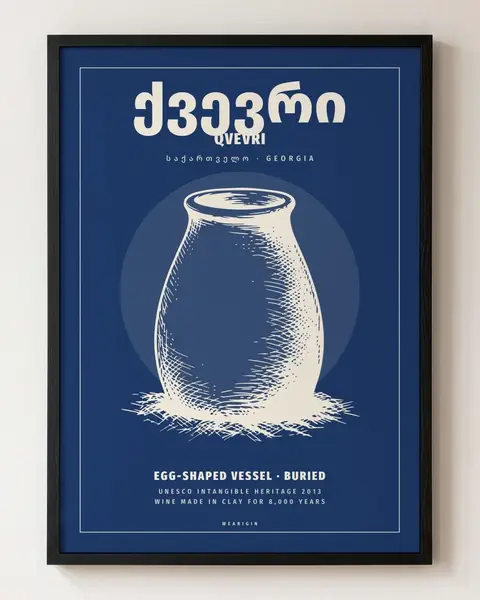
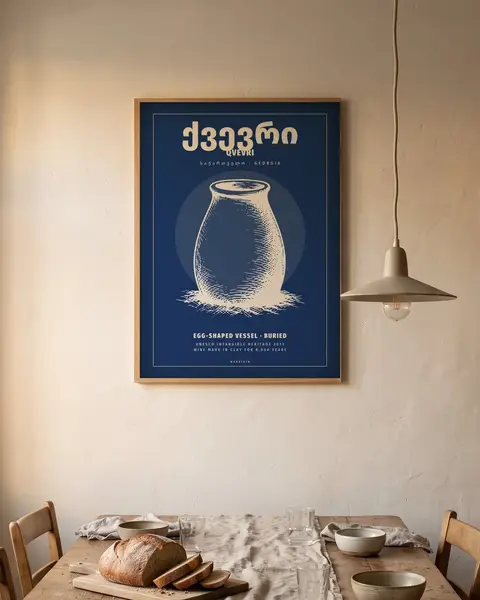
Our drawing is a free depiction of the vessel type, not a particular find. A full belly narrows to a short neck and a shallow elliptical mouth; hatching rounds the body and spreads into the ground at the foot. The name in Georgian script, ქვევრი, and GEORGIA stand beneath.
For a Georgian home abroad, for wine lovers, or for a wall that wants the oldest vessel of the vine.
The vessel at the heart of the Georgian table; wine made the way the first winemakers made it.