الجزائر · Algeria · Digital poster
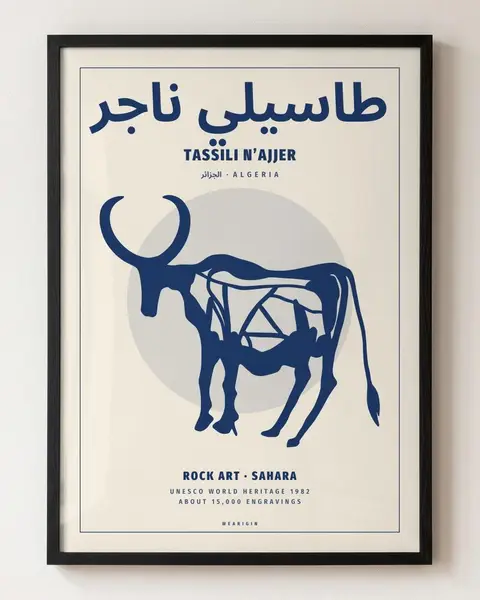
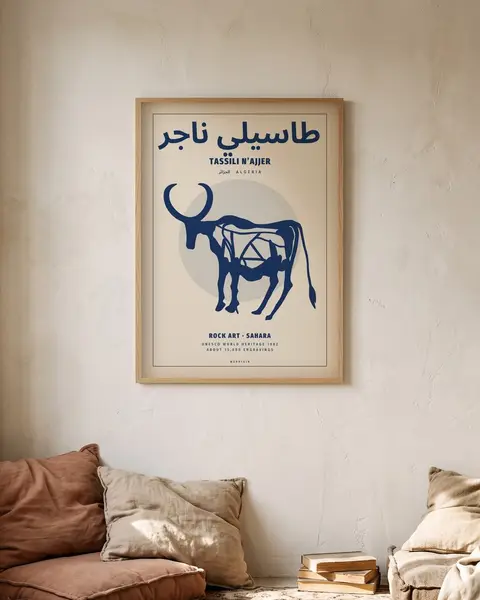
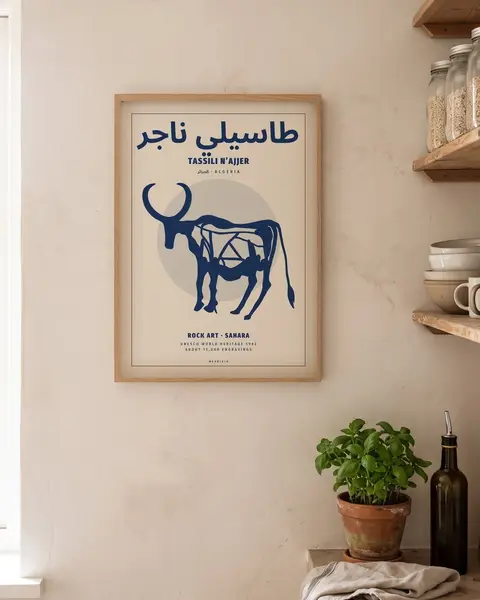
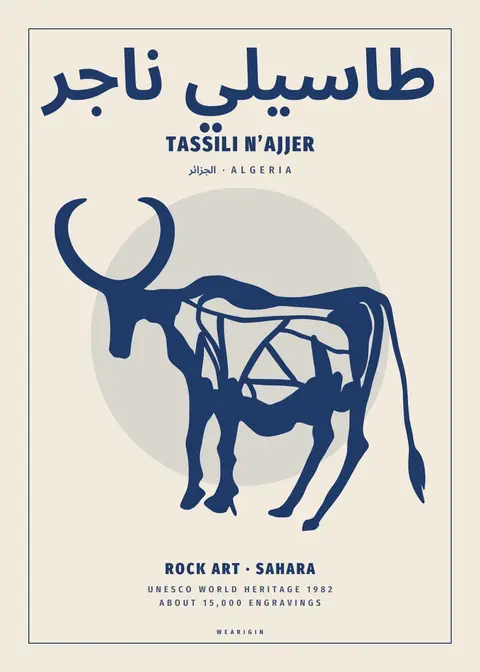
Tassili n'Ajjer (rock-art cattle)
Cattle from the Sahara, from when it was still green.
Colour: Night blue, light ground
€6.90
Digital file · instant download · no shipping
Download link valid for 30 days · up to 10 downloads · details
The download link is valid for 30 days from the date of provision and may be used a maximum of 10 times.
What you get
- · The chosen colour as 4 vector PDFs for standard frames: 50 × 70 cm (also 40 × 56, 30 × 42), ISO A (A4–A1), 3:4 (30 × 40, 45 × 60 cm, 18 × 24 in), 2:3 (20 × 30, 40 × 60, 60 × 90 cm, 24 × 36 in) — plus the same as JPG for copy shops and photo services (300 dpi up to A2 or 20 × 30 in; larger: use the PDF)
- · PDF: sharp at any size · JPG: 300 dpi at the stated size, plus a short printing guide
- · Files, not a printed poster, no frame
- · For private use, not for resale
Licence
With your purchase you acquire a non-exclusive, non-transferable licence for private use of the files. Permitted: printing for your own private use (also via a copy shop or photo service).
Prohibited: reselling or passing on the files, commercial use, making products for sale, using the files to train AI systems, or any public distribution of the files.
All copyright and other rights in the designs remain with the seller.
Where to print?
- · Copy shop near you: bring the PDF on a USB stick or send it by e-mail
- · Photo service in a drugstore or online: choose a poster size of the same shape (e.g. A3 or 30 × 40)
- · At home: up to A3 on a good printer
- · Tip: matte paper around 200 g/m² looks best
About the design
Tassili n’Ajjer is a sandstone plateau in the Sahara of south-eastern Algeria, near the borders with Libya and Niger. Its rock walls carry one of the largest collections of prehistoric art in the world.
The plateau covers more than 72,000 square kilometres and rises to 2,158 metres at Adrar Afao. About 15,000 engravings have been identified so far, the oldest presumed to be around 12,000 years old. Researchers group the art into traditions: the archaic hunters, the painted Round Heads, the Pastoral or Bovidian period, when domesticated cattle arrived, and then the Horse and Camel periods. The cattle scenes show a Sahara that was still green. Henri Lhote led expeditions here from 1956 onward. UNESCO inscribed the site as World Heritage in 1982, for both its culture and its nature; it is also a national park and home to the endangered Saharan cypress.
Our drawing is a free interpretation of the Bovidian cattle, not a copy of one rock image. A firm outline holds the animal together: long horns curving upward, a body divided by angular lines, four slender legs and a long tail. The name “tassili” and ALGERIA stand beneath.
For an Algerian home abroad, for lovers of prehistory, or for a wall that wants the oldest kind of picture.
Cattle from the time when the Sahara was green; the herders painted what they lived with.