افغانستان · Afghanistan · Digital poster
Mazar-i-Sharif · Blue Mosque
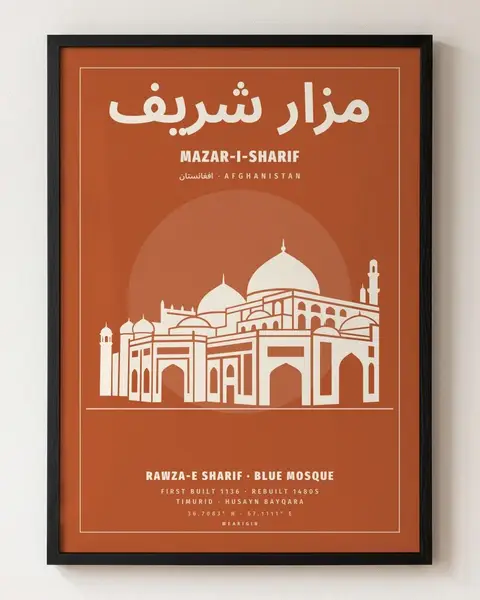
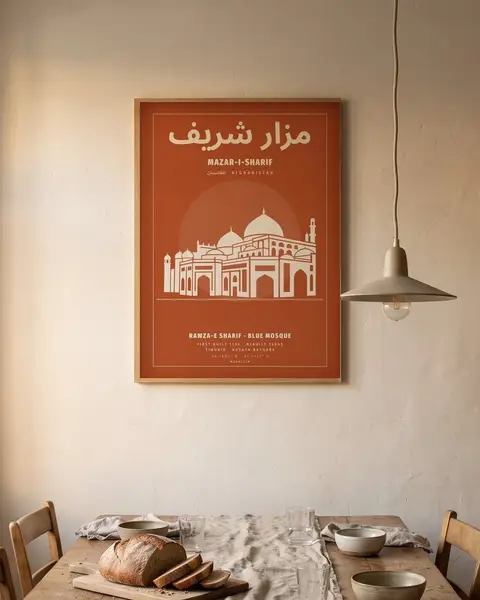
The Blue Mosque, the heart of Mazar-i-Sharif.
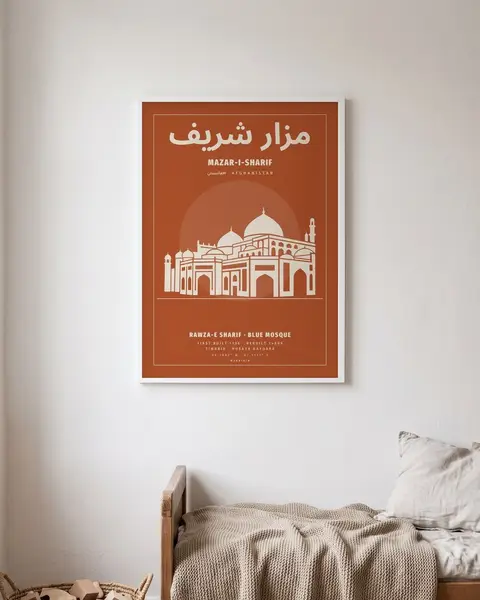
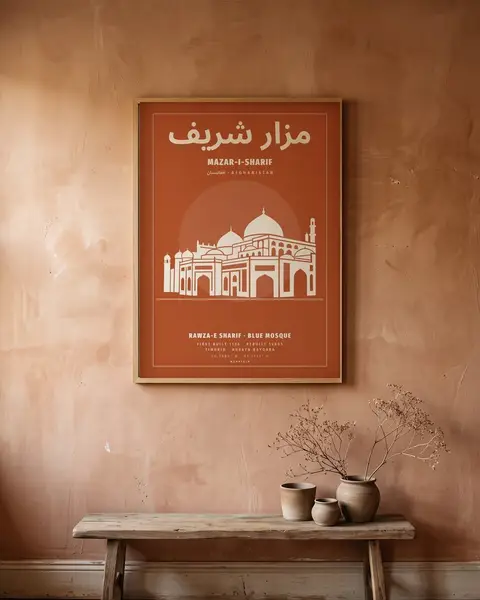
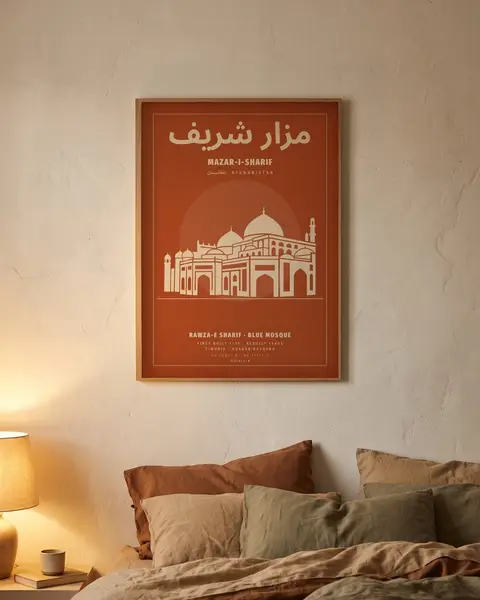
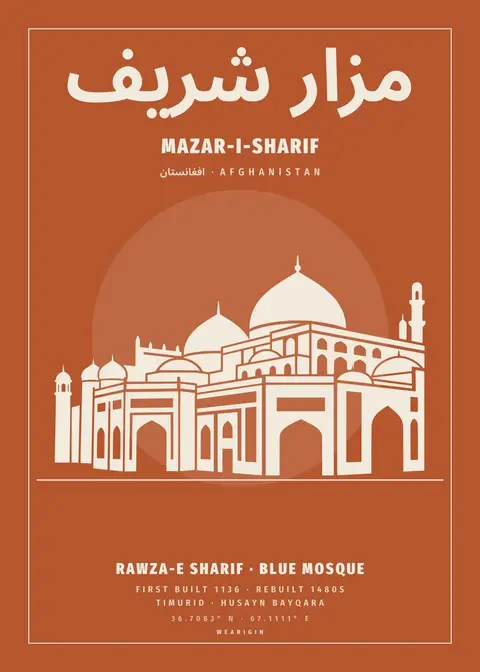
Colour: Terracotta, dark ground
€6.90
Digital file · instant download · no shipping
Download link valid for 30 days · up to 10 downloads · details
The download link is valid for 30 days from the date of provision and may be used a maximum of 10 times.
What you get
- · The chosen colour as 4 vector PDFs for standard frames: 50 × 70 cm (also 40 × 56, 30 × 42), ISO A (A4–A1), 3:4 (30 × 40, 45 × 60 cm, 18 × 24 in), 2:3 (20 × 30, 40 × 60, 60 × 90 cm, 24 × 36 in) — plus the same as JPG for copy shops and photo services (300 dpi up to A2 or 20 × 30 in; larger: use the PDF)
- · PDF: sharp at any size · JPG: 300 dpi at the stated size, plus a short printing guide
- · Files, not a printed poster, no frame
- · For private use, not for resale
Licence
With your purchase you acquire a non-exclusive, non-transferable licence for private use of the files. Permitted: printing for your own private use (also via a copy shop or photo service).
Prohibited: reselling or passing on the files, commercial use, making products for sale, using the files to train AI systems, or any public distribution of the files.
All copyright and other rights in the designs remain with the seller.
Where to print?
- · Copy shop near you: bring the PDF on a USB stick or send it by e-mail
- · Photo service in a drugstore or online: choose a poster size of the same shape (e.g. A3 or 30 × 40)
- · At home: up to A3 on a good printer
- · Tip: matte paper around 200 g/m² looks best
About the design
The Blue Mosque of Mazar-i-Sharif, Rawza-e Sharif, is the shrine said to hold the tomb of Ali, the fourth caliph and the first Imam of Shia Islam. It is the best-known building of northern Afghanistan.
The earliest surviving source placing Ali’s burial here is a 12th-century text by Abu Hamid al-Gharnati. The Seljuk sultan Ahmad Sanjar built the first shrine in 1136; the Mongols under Genghis Khan destroyed it in 1220. In 1480–81 the Timurid ruler Sultan Husayn Bayqara ordered the present shrine, and later rulers added the dome and decoration. The exterior is covered in tile mosaic and painted tile panels, mostly in shades of blue, many of them renewed in the 20th century. Pilgrims gather here at Nowruz, the spring new year, and people of all faiths visit all year round.
Our drawing is a free view of the complex, not a plan. A large central dome, smaller domes and minarets sit over a long front of pointed arches. The city’s name in Persian script, مزار شریف, stands above with the Latin form; the two fact lines and the coordinates below.
For a family from Mazar, for anyone who has walked through this courtyard, or for a wall that wants a dome.