1 to 10 · Digital poster
Hindi numbers
संख्याएँ
Colour: Black, light ground
€6.90
Digital file · instant download · no shipping
Download link valid for 30 days · up to 10 downloads · details
The download link is valid for 30 days from the date of provision and may be used a maximum of 10 times.
What you get
- · The chosen colour as 4 vector PDFs for standard frames: 50 × 70 cm (also 40 × 56, 30 × 42), ISO A (A4–A1), 3:4 (30 × 40, 45 × 60 cm, 18 × 24 in), 2:3 (20 × 30, 40 × 60, 60 × 90 cm, 24 × 36 in) — plus the same as JPG for copy shops and photo services (300 dpi up to A2 or 20 × 30 in; larger: use the PDF)
- · PDF: sharp at any size · JPG: 300 dpi at the stated size, plus a short printing guide
- · Files, not a printed poster, no frame
- · For private use, not for resale
Licence
With your purchase you acquire a non-exclusive, non-transferable licence for private use of the files. Permitted: printing for your own private use (also via a copy shop or photo service).
Prohibited: reselling or passing on the files, commercial use, making products for sale, using the files to train AI systems, or any public distribution of the files.
All copyright and other rights in the designs remain with the seller.
Where to print?
- · Copy shop near you: bring the PDF on a USB stick or send it by e-mail
- · Photo service in a drugstore or online: choose a poster size of the same shape (e.g. A3 or 30 × 40)
- · At home: up to A3 on a good printer
- · Tip: matte paper around 200 g/m² looks best
About the poster
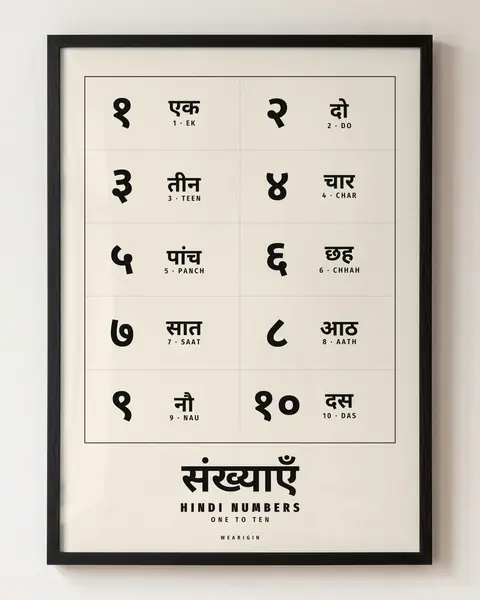
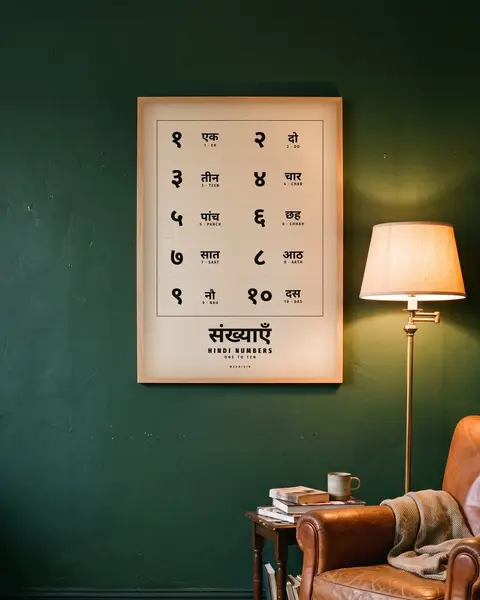
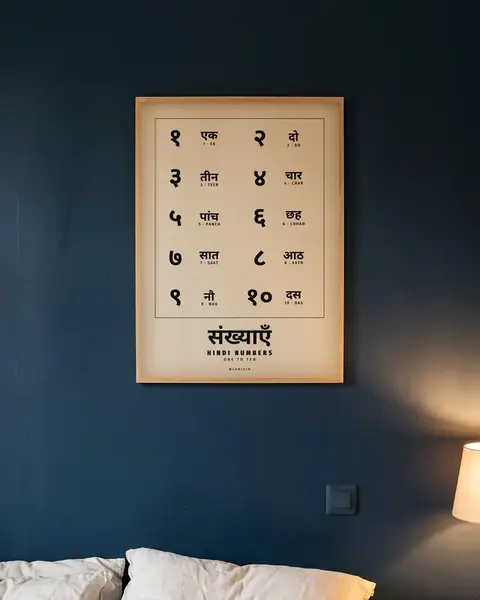
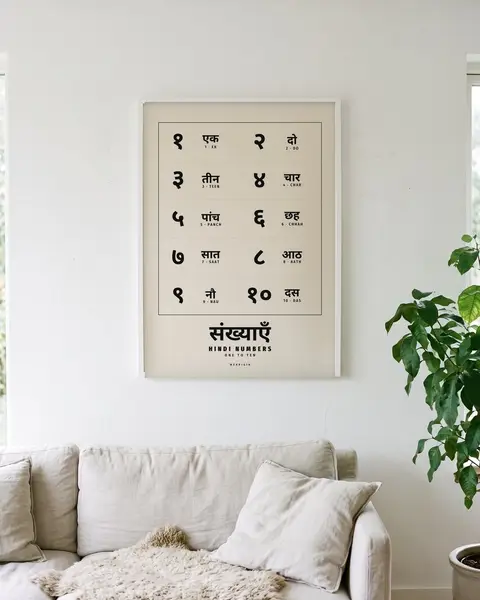
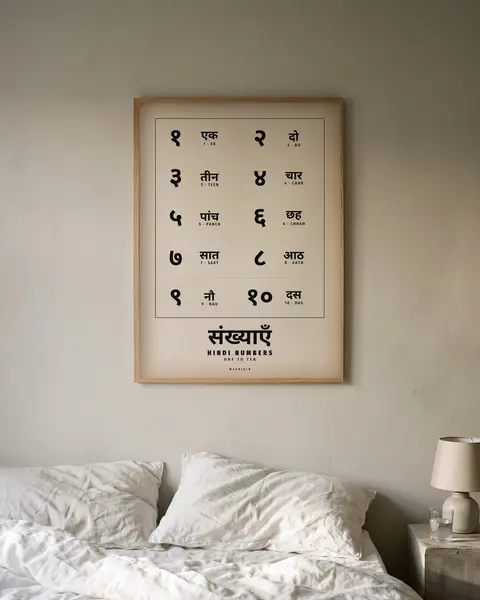
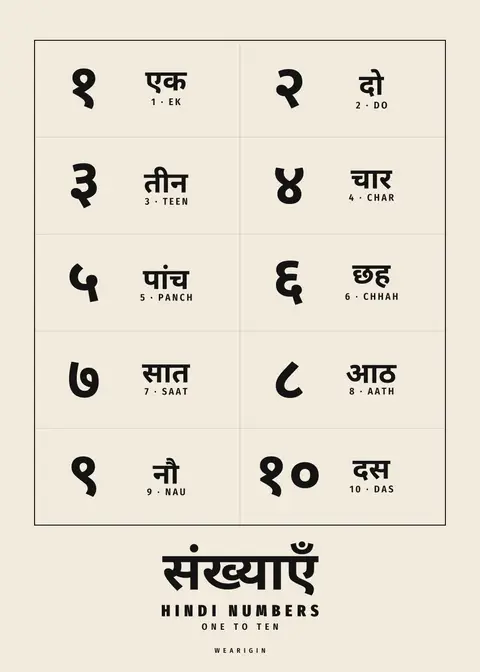
This poster shows the Hindi numbers 1–10 three ways: the Devanagari digit, the word in Devanagari and the word in Latin letters, from ek, one, to das, ten.
The digits १ २ ३ ४ ५ ६ ७ ८ ९ are not a foreign dress for our numbers; they are the parents of them. The ten digits and the positional system in which the place of a digit gives its value were invented in India between the 1st and 4th centuries, their shapes descending from the Brahmi numerals of Ashoka’s edicts; Aryabhata used a word for zero around 500, and the oldest dated inscription with a zero sign stands in Gwalior, from 876. Arab scholars took the system up in the 8th century, al-Khwarizmi wrote his book on calculation with the Indian numerals around 825, and from the Arab world the digits reached Europe, where they are still called Arabic. In India today both forms live side by side: the Devanagari digits on the poster and the international ones on most signs and screens. The words, ek, do, teen, char, panch, chhah, saat, aath, nau, das, are the same in Hindi and Urdu.
Each cell carries the Devanagari digit large, the Hindi word beside it and the number with its transliteration in small capitals beneath; संख्याएँ, numbers, stands below the grid.
For children of Indian families abroad, for anyone starting Hindi, or for a wall that wants the digits where they were born.
How to read the name: saṅkhyāeṅ, «numbers».